
As part of the EV Project India, a group of students from the Danish vocational school CELF, accompanied by their teachers and Jørgen Juul Rasmussen, Chair of the MTI Board and former Chair of the Danish EL-Federation, recently took part in an 11-day exchange visit to Hyderabad, India.
The exchange aimed to give students first-hand insight into India’s evolving EV sector by engaging directly with Indian students, educational environments, and professional contexts.
Learning Beyond the Classroom
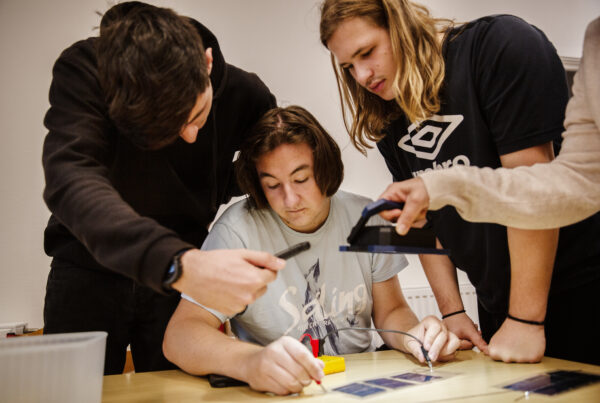
During their stay, the Danish delegation participated in a comprehensive programme combining technical training, school visits, company tours, and cultural activities. The students attended hands-on EV laboratory sessions, theoretical workshops, and mini-projects focusing on battery technology, charging infrastructure, and EV applications.
One of the main educational partners was the National Institute for Micro, Small and Medium Enterprises (NI-MSME), where the group was warmly welcomed. The students highlighted the hospitality and the supportive learning environment.
“We were well prepared by CELF, but reality was completely different from what we expected,” the students noted in their final reflection. “The culture, the heat, the traffic, the number of people – everything was on a different scale. It gave us a completely new perspective.”
Exchange with Educational Institutions
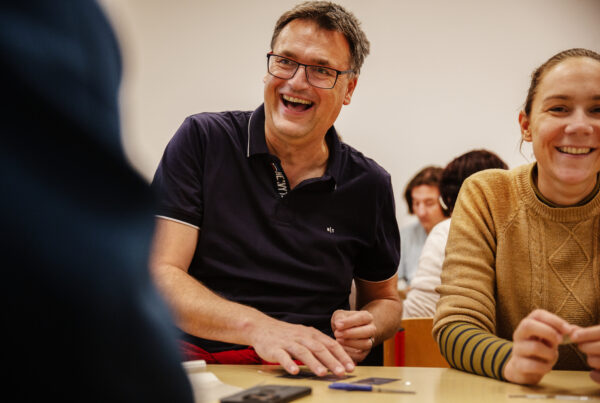
The programme included visits to several Indian educational institutions, including Atal Incubation Centre at GNITS, Skyy Skill Academy, and G. Narayanamma Institute of Engineering & Technology. Here, the Danish students worked alongside Indian students on idea development and technical tasks, exchanging insights about their education systems, as well as daily life.
At Atal Incubation Centre, the students collaborated in mixed groups, combining technical learning with social and cultural exchange. “The idea exchange and interaction were so good that we could have spent even more time on that part,” they reflected.
At Skyy Skill Academy, the group explored detailed EV training models, wiring systems, and laboratory setups, gaining insight into how EV education is delivered in India. The visit concluded with the students receiving diplomas in recognition of their participation.

Visits to Industry Leaders
The delegation also visited several companies working at the forefront of innovation in the EV industry. These included RETRON Engineers, a young company specialising in solar panels, battery systems, and charging infrastructure; T-Works, one of India’s largest prototyping and innovation centres; and TATA Motors, where students were introduced to large-scale industrial EV production environments.
These visits allowed students to see how theory is translated into practice and how different parts of the EV value chain connect.

Learning Across Borders
The EV Project India aims to strengthen international collaboration on EV skills and workforce development, and this exchange clearly showed how mobility programmes can broaden students’ horizons, strengthen technical competencies, and support cross-cultural understanding.
As one student summarised: “It was an amazing trip that gave us deep insight into Indian culture, the education system, and the EV industry.”